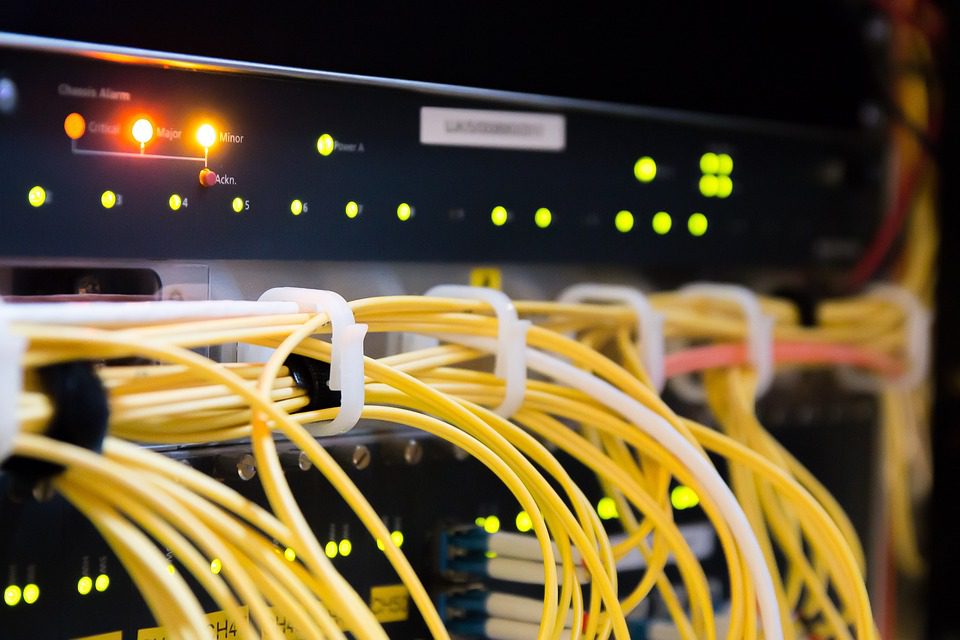
Two paths to the same LUN look like free redundancy on paper. In practice, most Windows VPS instances that bolt on MPIO gain 3–5 ms of steady-state latency instead of losing it, because the paths end at the same virtual storage array and the additional I/O dispatch only adds queuing. Multipath I/O is not a magic latency reducer; it is an availability mechanism with a measurable cost, and the numbers decide whether you keep it.
The mechanics are straightforward. Windows MPIO loads a vendor or Microsoft DSM, claims disks with multiple device instances, and presents a single disk object with a load-balancing policy — round robin, least queue depth, or failover only. Every additional path multiplies the I/O stack depth, the number of outstanding requests, and the chance that two paths to the same backing store contend for the same queue.
The first question is not “how many paths” but “do these paths terminate on physically separate controllers?” On a Windows VPS rented from a shared platform, iSCSI targets often share a storage NIC or even a storage node, so two sessions = one queue behind the scenes. Check with mpclaim -s -d whether both paths carry distinct target portal addresses and distinct initiator adapters.
When a second path helps
A second path genuinely helps when it crosses a failure domain: two separate network adapters, two switches, two target portals on different storage controllers. In that topology, failover recovers from a dead HBA in under 30 seconds with the Microsoft DSM’s default retry timers, and least-queue-depth balancing distributes bursts across two real queues. That is a real latency win during a failure, not in steady state.
It also helps when the first path saturates. A single 1 Gbps iSCSI session tops out around 118 MB/s; two sessions on separate adapters can push roughly 235 MB/s if the backing store can serve it. If your VPS disk queue length sits pinned at 2 or higher on a single path and CPU is idle, extra bandwidth is the bottleneck, and a second path can cut average latency by 20–40%.
When a second path hurts
- Both sessions to the same target IP — you get a second session, not a second queue.
- Round-robin on a storage array that does not deduplicate write cache, so writes land twice.
- Guest-level MPIO layered over host-level storage replication, doubling the retry budget.
- Small random reads where per-request dispatch overhead dominates the actual transfer.
The latency signature of the bad case is specific: average latency rises 2–6 ms, but maximum latency and the 99th percentile rise far more, because requests queue behind a single backend. IOPS as reported by the guest look higher while throughput stays flat — the classic sign of splitting one queue into two visible ones. If you see that, drop back to failover-only policy.
Verifying with Performance Monitor
Three counter sets carry the whole story. Disk counters give per-physical-disk latency and queue depth; MPIO counters give per-path bytes and I/O counts; Network Interface counters show whether the sessions actually use separate NICs. Add them to a data collector set at 1-second sampling for a 10-minute capture under a realistic workload, not a synthetic single-thread copy.
Get-Counter -Counter @(
 "\PhysicalDisk(*)\Avg. Disk sec/Read",
 "\PhysicalDisk(*)\Current Disk Queue Length",
 "\MPIO Disk(*)\Read Bytes/sec",
"\Network Interface(*)\Bytes Total/sec") -SampleInterval 1 -MaxSamples 600| Counter | Healthy | Investigate | Problem |
|---|---|---|---|
| Avg. Disk sec/Read | < 0.010 | 0.010–0.025 | > 0.025 |
| Avg. Disk sec/Write | < 0.015 | 0.015–0.040 | > 0.040 |
| Current Disk Queue Length | 0–1 | 2–4 | > 4 sustained |
| Path 0 vs Path 1 bytes/sec | within 20% | 20–50% skew | one path idle |
Counting the paths correctly
Windows does not expose MPIO paths as separate physical disks in the Disk performance set unless the DSM registers them. Use mpclaim -s -d for the path inventory and mpclaim -s -d <number> for per-path state, then cross-check that the MPIO Disk counter set lists the same number of instances. Mismatch means the DSM is not aggregating and you are measuring one path while believing you have two.
Also confirm the load-balancing policy actually applied. mpclaim -l shows the current policy per disk. A common misconfiguration is setting round robin via the GUI while a group policy or vendor DSM resets it to failover-only on reboot — you will see one path carrying zero bytes in the counter table and assume the storage is broken. Set the policy explicitly and re-verify after a restart.
Guarding the timeout and retry budget
Every additional path multiplies the time the I/O manager spends waiting before it declares the LUN dead. Default disk timeouts of 60 seconds per path mean a two-path failover can stall an application for two minutes if both paths are retried sequentially. Lower TimeOutValue under the disk’s registry parameters to 20–30 seconds and test the failover by pulling one NIC while a workload runs.
Measure the pause directly. A simple loop writing a timestamped file every second will show you a gap where the failover happened. Anything over 10 seconds needs the DSM retry count reduced, and if the application cannot tolerate a 30-second pause at all, MPIO is the wrong answer — use application-level retry and a single robust path instead.
Decision table for VPS workloads
| Workload | Paths | Policy | Reason |
|---|---|---|---|
| SQL Server data files | 2 on separate HBAs | Least queue depth | Burst absorption |
| Web/app tier, stateless | 1 | n/a | Restart is cheaper |
| Large sequential backup | 2 | Round robin | Throughput ceiling |
| Same-target dual session | 1 | Failover only | No second queue |
After the change
Change one variable at a time. Record the baseline counter set, add the second path, re-capture, and compare p50 and p95 rather than averages — averages hide the queuing spikes that make MPIO look good on a dashboard and bad in production. Keep the capture files for two weeks so a later slowdown can be compared against the pre-change state.
If the numbers do not improve, remove the extra path. That is a legitimate outcome and it frees an adapter for backup traffic or a management network. Multipath I/O earns its place at the storage layer, not the marketing layer; on a Windows VPS host you control end to end, you can test both configurations in an afternoon and keep whichever wins on p95 latency.
Related Articles:
 Troubleshooting RDP Connection Failures: Error Codes and Fixes for Windows VPS
 DFS-R Between Two Windows VPS Nodes: Backlog, Staging, and Conflicts
 How to Set Up Windows Server 2025 on a VPS: Installation, Configuration, and First Steps
PowerShell Remoting (WinRM) over HTTPS on a Windows VPS: Secure Automation Setup